The Mental Marathon: Inside Virat Kohli's Grueling Quest to Break Sachin's Century Record
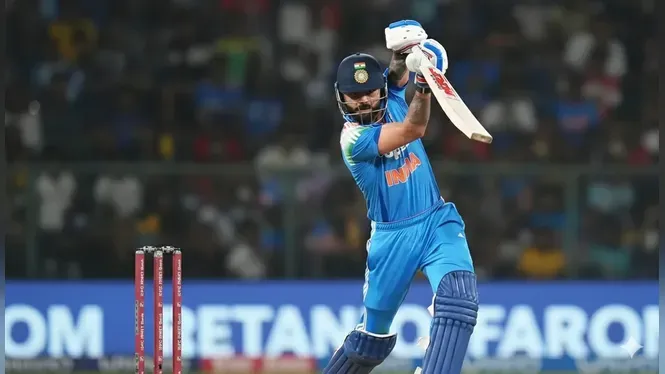
Virat Kohli walked off Indore's Holkar Stadium with bat raised but shoulders slumped - his 108-ball 124 had just become cricket's cruelest paradox. While his 54th ODI century etched another chapter in record books, New Zealand's 41-run victory on January 18 exposed the mental marathon required to chase Sachin Tendulkar's mythical 100-century summit and handed the Black Caps their first-ever bilateral ODI series triumph in India.
The Everest of Expectations
Every Kohli innings now unfolds under twin pressures: the immediate match situation and the invisible weight of Tendulkar's legacy. His Indore century - coming at 71/4 against a rampant New Zealand attack - showcased extraordinary focus amidst collapse. Yet sports psychologists recognize such performances extract hidden costs. "Milestone anxiety manifests in micro-tensions," explains Dr. Ravi Shastri, a leading sports psychologist unaffiliated with Team India. "The closer elite athletes get to legendary records, the more their brain fights performance-versus-legacy calculations mid-innings."
Decoding the Indore Pressure Cooker
January's series-decider became a laboratory for examining Kohli's chase psychology. Facing series defeat, his 91-delivery century contained two distinct phases:
Phase 1: Crisis Management (71/4)
With India's top order demolished, Kohli shelved flamboyance for survival. His first 50 runs came at near run-a-ball pace while shepherding debutant Nitish Kumar Reddy - textbook crisis batting under psychological duress.
Phase 2: Record Acceleration (159/6)
As partners dwindled, Kohli's strike rate soared to 140. This shift reveals the double-bind of modern superstar batting: needing to simultaneously rescue matches and satisfy century expectations. His eventual dismissal at 124 (India needing 114 more) laid bare the limitations of individual brilliance in team sport.
The Tendulkar Threshold: 46 Centuries Away
Tendulkar's 100 international tons represent cricket's most daunting statistical peak. Kohli's 54 ODI centuries (plus 30 in Tests and 1 in T20Is) place him closer than any player in history with 85 international tons. But mathematics reveals the true psychological challenge:
- At age 34, Kohli needs 15 more centuries to surpass Tendulkar's ODI record of 49 tons
- He requires 46 more international centuries overall to eclipse Sachin's 100
- That demands maintaining his career-best century frequency (7.2 innings/century) for 330+ innings
- No batsman over 35 has ever scored more than 12 international centuries
This creates an unconscious race against biological clocks - a pressure no predecessor faced while chasing records.
When Centuries Don't Equal Victory
The Indore paradox - stellar personal achievement amidst team failure - highlights cricket's complex reward system. Kohli's century saw him surpass Ricky Ponting as second-highest ODI centurion while also overtaking both Ponting and Virender Sehwag for most ODI hundreds against New Zealand, yet post-match discussions centered on India's first bilateral ODI series loss at home since 2019. New Zealand's historic triumph despite Kohli's heroics underscores cricket's eternal truth: milestones mesmerize crowds, but context defines legacies.
The Psychology of Chase Fatigue
Kohli's recent celebrations reveal subtle shifts. Compared to exuberant early-career reactions, his Indore century acknowledgment appeared subdued - bat raised briefly before immediate focus on the dwindling target. Sports psychologists identify this as "chase fatigue," where perpetual record pursuits drain celebratory instincts. The phenomenon commonly affects athletes nearing all-time marks, from Roger Federer's Grand Slam chase to LeBron James' scoring record.
Learning From Sachin's Journey
Tendulkar's own career offers psychological parallels. His 79th international century came at 37 - an age Kohli reaches in 2025. The Master Blaster's final 21 centuries spanned four years, requiring meticulous physical preservation and mental compartmentalization. Kohli's current fitness levels suggest similar longevity potential, but Tendulkar never chased a comparable active contemporary during his record accumulation - a critical psychological difference.
The Support System Factor
Behind every record chase stands an invisible team. Kohli's Indore resistance featured two key partnerships - 88 with Nitish Kumar Reddy and 99 with Harshit Rana - demonstrating his evolving reliance on lower-order allies. This dependency creates additional mental load; where Tendulkar often batted among legends like Dravid, Ganguly, and Laxman, Kohli's middle-order frequently features less experienced players. Protecting partners while accelerating scoring adds layers to an already complex psychological puzzle.
New Zealand's Unwitting Role
The Black Caps' historic first bilateral ODI series victory in India provides unexpected perspective on Kohli's quest. Their collective triumph over individual brilliance echoes cricket's foundational ethos - a reminder that even historic personal achievements pale beside team success. For Kohli, this creates philosophical tension: can breaking Tendulkar's record satisfy if it comes during transitional team phases?
The Road Ahead: Mind Over Milestones
As Kohli approaches his 35th birthday, his challenge becomes balancing legacy-building with present-tense performance. The Indore century proves his technical mastery remains intact, but cricket history shows psychological factors ultimately decide record chases. Brian Lara's pursuit of Sunil Gavaskar's Test century mark, for instance, saw increased dismissals in the 90s as pressure mounted.
Kohli's next phase requires unprecedented mental conditioning - perhaps limiting century talk in dressing rooms, embracing meditation techniques, or redefining personal success metrics. His recent willingness to bat through collapses rather than force results suggests evolving maturity, but Tendulkar's shadow grows longer with each passing ton.
Beyond Numbers: Redefining Greatness
The true measure of Kohli's quest may ultimately lie beyond statistics. Tendulkar's 100 centuries spanned 24 years across vastly different cricketing eras - from uncovered pitches to T20 revolutions. Matching this longevity requires adapting not just to bowlers or conditions, but to evolving definitions of batting greatness itself. Can Kohli's classical technique withstand baseball-inspired power hitting? Will anchor roles remain valued in hyper-aggressive eras?
These questions haunt every Kohli innings now, adding subconscious layers to an already Herculean task. As New Zealand's celebrating players left Indore that January night, one image lingered: cricket's most driven modern batsman walking alone past the giant Tendulkar stand - a living metaphor for the lonely road ahead.