National vs Domestic: The Growing Conflict Behind Kohli's Vijay Hazare Trophy Withdrawal
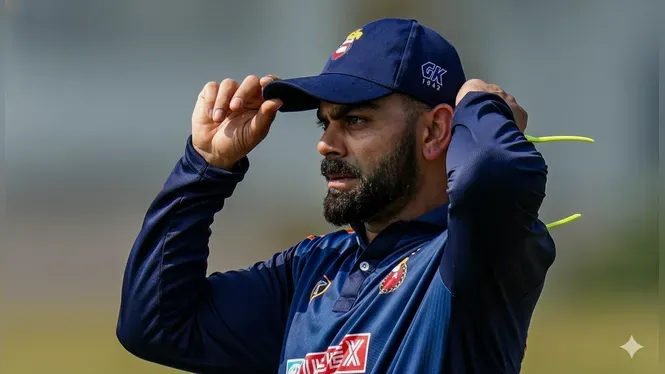
Indian cricket star Virat Kohli's abrupt withdrawal from Delhi's crucial Vijay Hazare Trophy match against Railways on January 6 has exposed deepening fault lines between national team commitments and domestic cricket obligations. The last-minute decision, confirmed by Delhi coach Sarandeep Singh who stated "he is not available," comes as Kohli prepares to rejoin the national squad for the first ODI against New Zealand on January 11 in Vadodara.
The Tug-of-War: National Priorities vs Domestic Responsibilities
Kohli's absence marks his second high-profile domestic withdrawal this season, following his explosive return to the Vijay Hazare Trophy where he smashed 131 and 77 runs in previous matches. This pattern highlights an escalating conflict within Indian cricket's ecosystem:
1. **Clashing Calendars**: The Vijay Hazare Trophy's critical group stage directly overlaps with India's international commitments, forcing players to choose between formats
2. **Condition Management**: National team physios increasingly prioritize workload management for key players during tight scheduling windows
3. **Competitive Imbalance**: Domestic teams like Delhi lose marquee players during critical tournament phases despite prior commitments
BCCI's Player Management Policies Under Microscope
The Board of Control for Cricket in India's (BCCI) central contract system creates inherent conflicts through its current structure:
**Contract Tier Pressures**: Grade A+ players like Kohli face greater scrutiny about domestic participation despite contractual obligations
**Financial Disparities**: Match fees for national duties dwarf domestic tournament payments, creating unconscious prioritization
**Medical Oversight**: National team physios hold final authority over player fitness decisions, often overriding state team requirements
Domestic Cricket's Credibility Crisis
Kohli's withdrawal comes at a critical juncture for Delhi, who lead Group D and require victory against Railways to secure advancement. This scenario repeats across domestic tournaments with concerning frequency:
**Tournament Integrity**: Five of eight Elite Group teams have lost key players to national call-ups during decisive matches this Vijay Hazare season
**Fan Engagement Impact**: Stadium attendance drops by average 38% when marquee players withdraw after being advertised, with fans now scrambling for limited live streaming options as broadcast coverage diminishes
**Development Consequences**: Young domestic players lose opportunity to test skills against international-quality opposition
The Ripple Effect on State Teams
Delhi's predicament illustrates how state teams bear the brunt of these scheduling conflicts:
**Selection Disruptions**: Coach Sarandeep Singh had built strategy around Kohli's batting at number three position
**Morale Challenges**: Teammates expressed private disappointment after preparing specific game plans involving the star batter
**Available Strengths**: Despite Kohli's absence, Delhi retains key players including Rishabh Pant and Harshit Rana who remain available for the crucial fixture
**Competitive Disadvantage**: Railways gained psychological edge knowing Delhi's lineup lost its most dangerous player
Alternative Solutions in Global Context
Other cricket nations employ different models to balance this conflict:
**England's County Mandate**: Requires national players to feature in minimum 3 domestic matches per season unless injured
**Australia's State Priority System**: Designates specific Sheffield Shield rounds where national players must make themselves available
**New Zealand's Flexible Contracts**: Allows domestic teams to "borrow" national players for crucial matches during international breaks
The Way Forward for Indian Cricket
This incident highlights urgent need for structural reforms:
1. **Clearer Scheduling Gaps**: Mandatory 72-hour buffers between domestic and international commitments
2. **Domestic Match Quotas**: Minimum appearance requirements for centrally contracted players
3. **State Team Consultation**: Formalized process where national selectors must consult domestic coaches before withdrawals
4. **Financial Incentives**: Performance bonuses for internationals who complete domestic tournament commitments
Broader Implications for Cricket Ecosystem
Kohli's absence transcends a single match withdrawal, revealing systemic issues affecting Indian cricket's foundation:
**Talent Pipeline Risks**: Reduced elite player presence in domestic circuits hampers young players' development
**Commercial Value Erosion**: Sponsors hesitate to invest in domestic tournaments lacking consistent star power
**Competitive Dilution**: Tournament results increasingly reflect which teams retain access to national players rather than pure merit
Conclusion: Balancing India's Cricket Priorities
Virat Kohli's Vijay Hazare Trophy withdrawal - alongside Rohit Sharma and Rishabh Pant's similar prioritization of national camp - serves as critical inflection point for Indian cricket administration. With Kohli now focused on ODI opportunities ahead of the 2027 World Cup, his absence underscores the growing prioritization of international commitments. As Delhi proceeds without their star batter against Railways ahead of his scheduled return for the January 11 ODI, the broader question remains: Can Indian cricket establish a sustainable equilibrium between national glory and domestic strength? The solution requires collaborative policy-making that respects both international ambitions and domestic cricket's vital role in nurturing future champions. Until then, state teams will continue facing last-minute scrambles when national duty comes calling.