Beyond Politics: How Pakistan's T20 World Cup Boycott Threat Could Cost ICC Millions in Lost Revenue
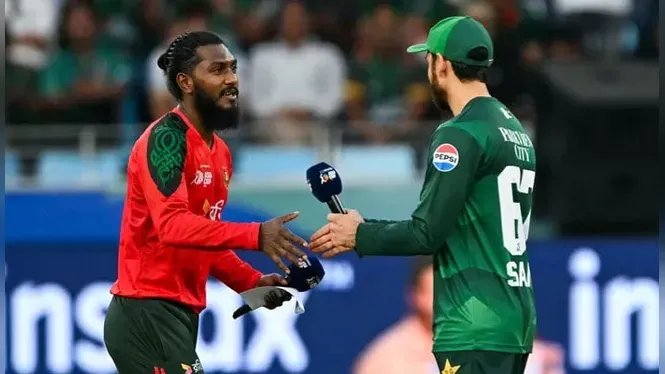
The International Cricket Council faces a financial catastrophe as Pakistan's potential boycott of the 2026 T20 World Cup threatens to unravel billion-dollar broadcast agreements and sponsorship commitments. This brewing crisis - sparked by the ICC's rejection of Bangladesh's request to shift matches out of India - could cost cricket's governing body upwards of $120 million in immediate losses according to industry analysts.
The Domino Effect: How One Boycott Could Sink Tournament Economics
Former Pakistan captain Rashid Latif's call for boycott action in solidarity with Bangladesh has exposed the fragile financial architecture of global tournaments. "A Pakistan withdrawal would immediately trigger force majeure clauses in ICC contracts," explains a Mumbai-based sports lawyer familiar with ICC agreements. "Broadcasters pay 40% premiums for India-Pakistan matches - those funds would need refunding."
The tournament's Indian broadcast deal alone values Pakistan's group stage matches at $18-22 million based on expected advertising revenue. With Pakistani players like Babar Azam and Shaheen Afridi among the top-10 most marketable T20 athletes globally, sponsors could demand 25-30% rebates on their $15 million team-specific partnerships.
Broadcast Blackout: The $80 Million Television Dilemma
Pakistan's absence would create scheduling chaos for Star Sports and Disney+ Hotstar, who paid $3 billion for ICC rights through 2027. The broadcasters' mandatory minimum of 12 Pakistan matches across the tournament represents 28% of their advertising inventory. Industry sources confirm contingency plans being drafted for substitute programming.
"The India-Pakistan match is our Super Bowl," revealed a Star Sports executive speaking anonymously. "Last year's clash generated ₹75 crore ($9 million) in ad revenue. Losing that would require us to renegotiate all sponsor commitments."
Sponsorship Tsunami: Global Brands Review Contracts
At least six of the ICC's 15 global partners have Pakistan-specific activation clauses in their contracts. Emirates Airlines' $12 million team sponsorship and Pepsi's $8 million digital rights deal with Pakistani players both contain participation requirements that could void agreements.
More critically, the ICC's $50 million title sponsorship with Aramco includes market penetration targets in Pakistan and Bangladesh. With both nations potentially disengaged, the petroleum giant could legally reduce its financial commitment by 35% according to sports marketing experts.
The Player Contract Earthquake
Beyond organizational losses, 21 Pakistani players face individual financial ruin. Central contracts guarantee World Cup participation bonuses worth $150,000-$450,000 per player. More significantly, missing the tournament could void $3.2 million in collective endorsement deals with brands like Coca-Cola, HBL, and Gray-Nicolls.
"Players are essentially walking billboards during ICC events," notes player agent Talha Ejaz. "Babar Azam stands to lose $800,000 in personal sponsorships if Pakistan withdraws. These opportunities don't come back."
Future Hosting Rights: The $300 Million Question
The ICC's upcoming host nation decisions now hang in the balance as Pakistan considers boycotting the 2026 T20 World Cup if Bangladesh follows through on its withdrawal threat. "No major nation will bid for tournaments if political disputes can derail them," warns a Cricket Australia insider.
More urgently, the ICC's proposed $300 million sale of 2031 World Cup hosting rights to India faces new complications. Potential buyers now demand political risk insurance premiums that could increase costs by 18-22%, making the entire package less attractive to broadcast partners.
The Ripple Effect on Cricket's Ecosystem
Smaller cricket nations face collateral damage. The ICC's revenue-sharing model directs 12% of tournament profits to associate members. A $100 million shortfall would slash development funding by $12 million - equivalent to the annual budgets of 15 associate nations combined.
Stadium contractors in Colombo and Dambulla face losses too, having invested $28 million in upgrades specifically for Pakistan's scheduled matches. "We allocated our best hospitality boxes to Pakistani corporate partners," laments a Sri Lanka Cricket official. "Those deals are now in jeopardy."
The Political Calculus vs Financial Reality
While former players like Rashid Latif frame the boycott as "an opportunity to challenge the existing cricket order," economists warn of lasting damage. Indian legend Madan Lal has further complicated matters by claiming Pakistan is instigating Bangladesh's boycott stance to undermine India. Pakistan's last major boycott in 1996 saw their ICC revenue share slashed by 40% for eight years - a $65 million penalty in today's dollars.
The PCB itself risks $12 million in ICC participation fees plus $9 million in performance bonuses. More critically, they could lose voting rights on ICC financial committees - a devastating blow for a nation seeking more hosting opportunities.
The Path Forward: Negotiation or Nuclear Option?
With Bangladesh's participation still uncertain after their venue change request rejection, the ICC faces simultaneous crises. While Pakistan has expressed disappointment over the ICC's decision regarding Bangladesh's matches, they've confirmed they won't withdraw from the current tournament. Emergency talks propose compromise solutions including neutral-venue matches and revenue guarantees, but sources indicate Pakistan wants structural ICC reforms.
As the tournament start date looms, broadcasters have set deadlines for final participation confirmations. The coming weeks will determine whether cricket's showpiece event becomes a financial triumph or a $500 million cautionary tale about mixing sports and geopolitics.
The stakes extend beyond this tournament. With media rights for the 2024-2027 cycle up for renegotiation in September, the ICC cannot afford doubts about tournament integrity. A Pakistan boycott could depress bids by 15-20% - a $600 million potential loss over four years that would reshape cricket's financial landscape for a generation.