Abhishek Sharma’s Meteoric Rise: How the Youngster Cemented His Spot in India’s T20 World Cup Plans
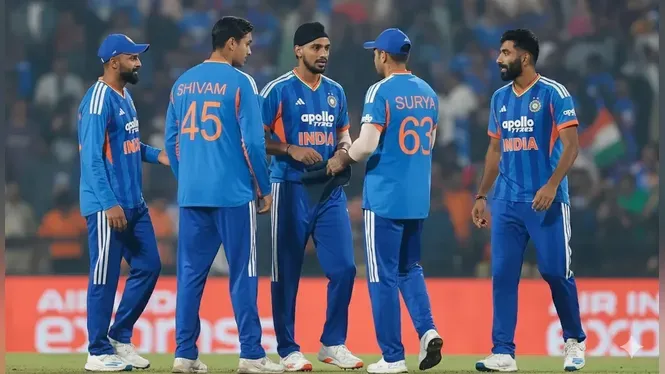
Explosive Start Sets Tone for Indian Dominance
The Jawaharlal Nehru Stadium in Nagpur witnessed the birth of a new T20 superstar as Abhishek Sharma demolished New Zealand's bowling attack with a career-best 84 runs. From the first over, the 24-year-old left-hander displayed the fearless approach that's becoming his trademark, smashing 7 fours and 6 sixes in just 46 deliveries. His innings formed the backbone of India's imposing 238/7 - their highest T20I total against New Zealand, setting up a comprehensive 48-run victory and 1-0 series lead.
From Domestic Prodigy to International Force
Sharma's journey to this breakthrough performance followed a textbook progression through India's cricket ecosystem. After dominating age-group tournaments and domestic circuits, his IPL performances for Sunrisers Hyderabad showcased his ability to perform under pressure. This innings marked his transition from promising talent to genuine match-winner, coming just 18 months after his international debut.
The Turning Point: Powerplay Onslaught
The match's decisive phase came during the powerplay overs as Sharma tore into New Zealand's new-ball attack. Tim Southee's second over disappeared for 22 runs, including three consecutive boundaries, setting the pattern for India's dominance. By the end of the powerplay, Sharma had raced to 48 off just 22 balls - the fastest fifty by an Indian against New Zealand in T20Is.
Middle Order Complements Young Gun's Heroics
When Sharma finally departed in the 13th over, Rinku Singh (44* off 22 balls) ensured there was no momentum drop. The left-handed finisher hammered 4 sixes in his unbeaten cameo, including 22 runs off Adam Milne's final over. Their 80-run partnership off just 35 deliveries demonstrated India's new batting philosophy - sustained aggression throughout the innings.
Bowling Unit Executes Clinical Defense
Chasing 239, New Zealand never recovered from early strikes by Arshdeep Singh and Hardik Pandya that derailed their chase. Glenn Phillips' fighting 78 (45 balls) proved academic as India's bowlers maintained relentless pressure. Varun Chakaravarthy (2/26) and Shivam Dube (2/25) shared four wickets, while Mukesh Kumar's economical 1/29 in the death overs choked New Zealand's chase. The visitors finished at 190/7 - falling 48 runs short of their target.
Tactical Masterstroke: Sharma's Role Evolution
This innings marked a strategic shift in Sharma's utilization. Promoted to open after middle-order experiments, he repaid the management's faith by dominating the powerplay. His strike rate of 182.60 against pace and 175.00 against spin demonstrated complete mastery across bowling types - a critical asset for World Cup preparations.
Fielding Prowess Matches Batting Brilliance
Sharma's impact extended beyond batting. His direct-hit runout of Mark Chapman in the 9th over broke New Zealand's most dangerous partnership. This all-round contribution highlighted his growing value as a complete T20 package - exactly what India needs ahead of the global tournament.
World Cup Implications: Solving India's Top-Order Puzzle
With this performance, Sharma has potentially solved India's long-standing opening conundrum. His ability to combine traditional strokeplay with modern power-hitting gives the team a dimension they've lacked since Rohit Sharma's peak years. More importantly, his left-handed presence disrupts opposition bowling plans - a tactical advantage that could prove crucial in World Cup conditions.
Post-Match Reflections: Building Momentum
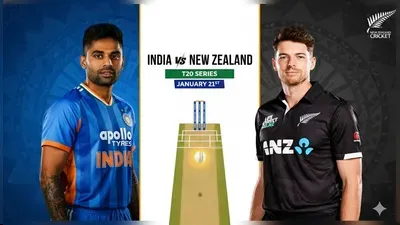
The commanding 48-run victory gives India a decisive 1-0 lead in the five-match series, establishing a template for their T20 World Cup campaign. Sharma's emergence allows flexibility in team composition, potentially accommodating both anchor and aggressor roles in the top order.
Road Ahead: Consistency the New Challenge
While one innings doesn't guarantee World Cup selection, Sharma's performance aligns perfectly with India's strategic timeline. Over the next 18 months, management will focus on developing his consistency against varied attacks and in different conditions. His ability to adapt will determine whether this becomes a career-defining knock or just another flash in the pan.
Historical Context: Joining Elite Company
Sharma's 84 now stands as the third-highest score by an Indian against New Zealand in T20Is, behind Rohit Sharma's 118 and KL Rahul's 110. More significantly, it's the highest score by an Indian left-hander in T20Is against top-five ranked teams - surpassing Yuvraj Singh's famous 70 against Australia in 2007.
The Opposition View: Respect Earned
New Zealand captain Mitchell Santner acknowledged Sharma's impact: "When someone gets going like that in the powerplay, it's extremely hard to pull things back." The Black Caps' bowlers tried seven different options without finding an answer to the left-hander's calculated assault.
Technical Breakdown: What Makes Sharma Special
Analysis of Sharma's innings reveals three key strengths: 1) Lightning-fast hands allowing last-moment shot adjustments 2) Unorthodox shot range including switch-hits and scoops 3) Footwork precise enough to convert good balls into scoring opportunities. These attributes make him particularly dangerous in fielding-restricted powerplays.
Broader Impact: Inspiring Next Generation
Beyond immediate results, Sharma's rise represents a victory for India's domestic cricket structure. His journey from Punjab's age-group circuits to international stardom validates the BCCI's talent pathway system. Young left-handers across India now have a contemporary role model beyond traditional legends like Ganguly and Yuvraj.
Looking Forward: Series Implications
With four matches remaining, New Zealand faces strategic dilemmas after conceding 89 runs in the last five overs - an area requiring urgent attention. For India, the focus shifts to maintaining intensity while testing bench strength following this commanding start to the series.
The Verdict: World Cup Window Opens
While it's premature to anoint Sharma as India's T20 savior, this innings has accelerated his World Cup timeline dramatically. His ability to perform under pressure against quality opposition suggests he's ready for the global stage. As India builds toward 2026, Sharma's left-handed dynamism offers tactical flexibility that could prove decisive in crunch World Cup matches.