Ravichandran Ashwin Exposes Hidden Mental Battles in India's Cricket Format Shifts
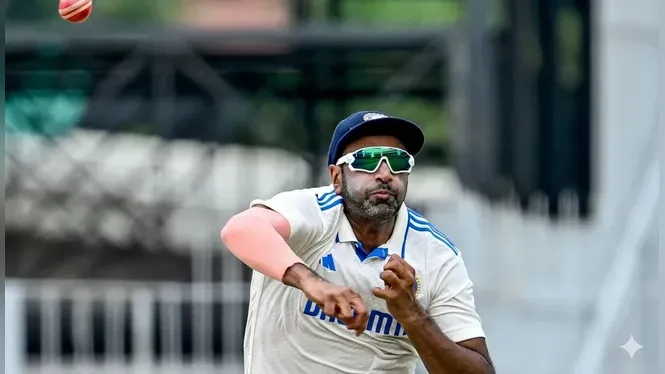
When Shubman Gill walked back to the pavilion during India's third ODI against New Zealand, few realized his dismissal would spark cricket's most revealing conversation about invisible psychological wars. Veteran spinner Ravichandran Ashwin didn't just analyze a wicket - during his on-air explanation of Gill's dismissal, he held up a mirror to Indian cricket's deepest crisis: the mental toll of constant format switching while revealing how modern batters constantly battle invisible challenges when moving between T20s and ODIs.
The Soft Cricket Epidemic: Ashwin's Brutal Diagnosis
Ashwin's criticism cut through typical post-match clichés after India's ODI series loss. "We played very soft cricket," he declared, capturing the team's lackluster response to New Zealand's challenges. He emphasized that India's response looked "a bit flat" against the Kiwis' tactics - a dangerous sign with the 2026 T20 World Cup approaching.
The veteran off-spinner transformed into cricket's professor during his analysis of Gill's dismissal. While commentators discussed shot selection, Ashwin revealed batters today face unprecedented mental battles when moving between T20s and ODIs. Responding to Sunil Gavaskar’s observations, Ashwin explained how format transitions disrupt timing, decision-making, and confidence.
Jadeja's Crisis: When Pressure Becomes Paralysis
Ashwin saved his sharpest observations for Ravindra Jadeja's struggles, warning "he's under massive pressure" with former India cricketers suggesting he may soon lose his ODI spot to Axar Patel. Ashwin called for "BOLD changes" in Jadeja's game, emphasizing the need for mental reinvention rather than technical tweaks while urging more creativity in the 50-over format.
The psychological toll showed clearly in Jadeja's performances. Where fans saw poor shots, Ashwin saw a player mentally trapped between formats - unable to adjust his T20 instincts to ODI demands. This format confusion creates what Ashwin termed "invisible challenges," where players second-guess their natural game.
Kuldeep's Confidence Crash: A World Cup Warning
Ashwin's concerns extended to spinner Kuldeep Yadav, whose confidence he believes "would have come down a bit" after the New Zealand series. The veteran spinner warned that "New Zealand may have dented his confidence before the T20 World Cup," highlighting how poor ODI performances can psychologically damage players across formats.
With the 2026 T20 World Cup looming, Ashwin urged Kuldeep to "experiment a little more," stating he and Jadeja "had room to become more creative in the 50-over format." His solution focused on encouraging creativity over conformity to rebuild confidence.
The Format Switch Trap: Why Elite Players Struggle
Ashwin's analysis exposed cricket's dirty secret - the mental whiplash of switching formats. Players face three invisible battles:
1. Timing Disruption: T20 instincts clash with ODI patience
2. Decision Paralysis: Split-second choices become overthought
3. Confidence Contamination: Poor form in one format infects others
This explains why technically gifted players like Gill and Jadeja suddenly look vulnerable. As Ashwin observed during Gill's dismissal, what appears like poor technique often masks deeper mental conflicts between format-specific approaches.
Ashwin's Prescription: Boldness Over Safety
The veteran spinner's solution-focused criticism offered clear pathways:
- **Mental Flexibility Training**: Developing separate "format mindsets"
- **Creative Experimentation**: Encouraging unconventional approaches during tough phases
- **Confidence Firewalls**: Preventing one format's failures from affecting others
Ashwin's T20 World Cup warning - "If it does not go well..." - served as a wake-up call. He emphasized that technical adjustments won't suffice; India needs psychological rebuilding.
The Gavaskar Connection: Bridging Generational Insights
Ashwin's dialogue with Sunil Gavaskar during Gill's dismissal analysis symbolized cricket's evolution. Where Gavaskar represented traditional technical analysis, Ashwin introduced modern psychology by explaining how batters battle invisible format-switching challenges. Their exchange highlighted how today's players need both technical mastery and mental agility.
New Zealand's Psychological Blueprint
India's series loss offered more than tactical lessons. The Kiwis demonstrated superior mental adaptation - adjusting seamlessly between formats while India struggled. Despite India's challenges, Arshdeep Singh provided a bright spot in the third ODI, striking on his fourth ball to dismiss Henry Nicholls. Ashwin's critique suggests opponents have mastered the psychological aspects India still neglects.
The Road to 2026: Ashwin's Mental Health Warning
With the next T20 World Cup approaching, Ashwin's analysis carries urgent implications. His comments on Jadeja's pressure, Kuldeep's confidence, and Gill's dismissal patterns reveal a team at psychological crossroads. Technical skills remain world-class, but mental fatigue from constant format switching threatens India's trophy ambitions.
The veteran's call for "bold changes" extends beyond personnel or tactics. It demands a revolution in how Indian cricket approaches mental preparation - creating specialized support systems for format transitions, confidence maintenance, and pressure management.
Cricket's New Frontier: Winning Minds Before Matches
Ashwin's critique marks a turning point in cricket analysis. By highlighting the mental battles behind on-field failures, he's shifted focus from "what went wrong" to "why it went wrong." His insights reveal modern cricket's true battlefield isn't the pitch but the player's mind - especially when constantly switching between T20's chaos and ODI's calculated rhythms.
As India reflects on the New Zealand defeat, Ashwin's message rings clear: Technical skills might win matches, but only mental strength can win tournaments. With format transitions becoming more frequent, teams that master these invisible psychological wars will dominate cricket's future.