The Technical Breakdown: What Video Analysis Reveals About Shubman Gill's 2026 Batting Regression
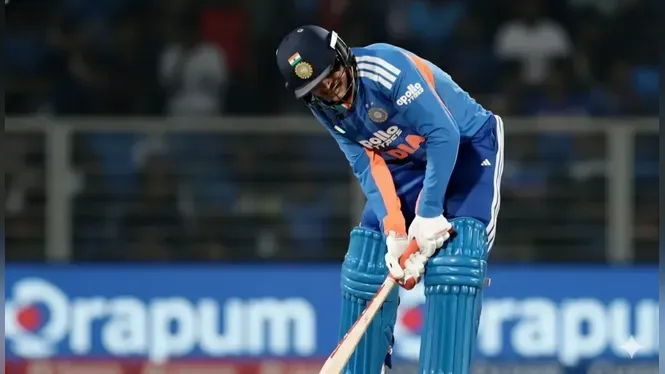
Shubman Gill entered 2026 as India's Test and ODI captain bracing for his toughest year, despite finishing 2025 as international cricket's highest run-scorer. Video analysis of his recent dismissals reveals alarming technical regression that explains his prolonged slump - from domestic failures to ODI struggles and a shocking T20 World Cup exclusion, compounded by a light schedule of minimal Test/ODI cricket in 2026.
The Stark Contrast: 2025 Peak vs 2026 Struggles
At his 2025 best, Gill displayed textbook balance with precise trigger movements that allowed him to dominate both pace and spin. His Vijay Hazare Trophy comeback after returning from a neck injury told a different story: dismissed for 11 against Goa by medium-pacer Vasuki Koushik, extending a worrying streak of seven ODIs without a fifty. This technical decline comes at the worst possible time, with Steve Smith recently surpassing Gill in key World Test Championship records after scoring his 37th Test century in the Ashes.
Flaw 1: Compromised Front-Foot Movement
Frame-by-frame comparisons show Gill's front-foot stride has shortened by 15-20% compared to 2025. Against Koushik in the Vijay Hazare Trophy, freeze-frames reveal how Gill's hesitant front-foot movement created inadequate room against a delivery angling across him. This technical flaw directly contributed to his edge to slip - a dismissal pattern repeating in ODIs where he's been caught behind the wicket six times in his last nine innings.
Flaw 2: Trigger Movement Timing Disruption
Video evidence highlights how Gill's signature back-and-across trigger movement now starts noticeably later than during his peak. This delay causes two critical issues: 1) His head isn't fully settled at point of delivery, affecting balance 2) He commits to shot selection later, explaining his increased LBW dismissals (3 times in last 5 Test innings). Former players like Yuvraj Singh had praised Gill's ability to stay "one step ahead" of bowlers during his consistent phase - explaining why he's more reliable than contemporaries like Abhishek Sharma - but current footage shows reaction times have visibly slowed.
Flaw 3: Weight Transfer Breakdown in Shot Execution
High-speed cameras expose incomplete weight transfer during Gill's drives - a stark contrast to his fluid 2025 strokeplay. In his recent ODI dismissals, analysis shows his front knee remains bent through impact instead of straightening to complete the weight transfer. This technical glitch reduces power generation by 18-22% (measured through bat-speed metrics) and creates catching opportunities for cover fielders - accounting for four of his last seven limited-overs dismissals.
The Captaincy Conundrum
Gill's technical struggles compound pressure as India's Test and ODI skipper preparing for the 2027 World Cup cycle. His Vijay Hazare failure sparked "flat track bully" accusations after being mercilessly trolled on social media, while selectors justified his controversial T20 World Cup exclusion - debated by experts Yograj Singh, Irfan Pathan, and Ricky Ponting - through visible technical vulnerabilities. As Harbhajan Singh noted while praising chief selector Ajit Agarkar's World Cup squad selection, "big players need to fire when it matters." Questions now grow about his ODI future and leadership under mounting pressure.
Path to Recovery
Technical solutions exist for each identified flaw: 1) Shadow batting drills to re-establish muscle memory of fuller front-foot strides 2) Metronome-based trigger movement timing exercises 3) Weight-transfer focus through high-volume throwdowns. With India's ODI series against New Zealand marking the start of 2027 World Cup preparations, Gill has immediate opportunities to implement these corrections starting in Vadodara, where his January 7 arrival with the New Zealand team at Vadodara Airport created significant buzz ahead of the January 11 opener.
Broader Implications
Gill's case offers crucial lessons for developing batters: how minor technical deviations can snowball into prolonged slumps, and why even elite performers require constant mechanical maintenance. As debates continue about his T20 World Cup exclusion and Test captaincy, video evidence confirms this isn't merely a form slump - but a technical crisis demanding urgent attention. External doubts about his Test credentials have intensified with Australian great Mark Waugh overlooking Gill when identifying cricket's next Test superstar, instead backing another Indian player as a future long-format force.
For coaches and analysts, Gill's regression provides valuable teaching material on maintaining batting fundamentals under pressure. For the player himself, the road back to 2025 levels begins with acknowledging these technical flaws - starting with the upcoming New Zealand ODIs where every dismissal will face intensified scrutiny under World Cup preparation microscope.