From 1789 to Karachi: The Ancient Cricket Record Pakistan Just Shattered
The Weight of History
Cricket's record books still carried an ancient milestone as players took the field in Karachi last Saturday. For 232 years, the lowest successful defense in first-class cricket remained untouched - a relic from the sport's earliest days when players wore top hats and matches lasted days. That all changed when Pakistan Television (PTV) bowled a Shan Masood-led Sui Northern Gas Pipeline Limited (SNGPL) team featuring multiple internationals out for 37 while defending just 40 runs.
1791: The Record That Stood Through Centuries
The previous benchmark dated back to June 1791 at London's Thomas Lord Ground. In a match between Middlesex and All-England, the bowlers successfully defended 40 runs - a feat considered extraordinary in an era where pitches were uneven and batting techniques primitive. This record survived:
- The Napoleonic Wars
- The invention of overarm bowling
- Two World Wars
- Cricket's global expansion
For context, when this record was set, George Washington was serving his first term as US President, and cricket balls were handmade from cork and leather.
2023: Karachi Creates New History
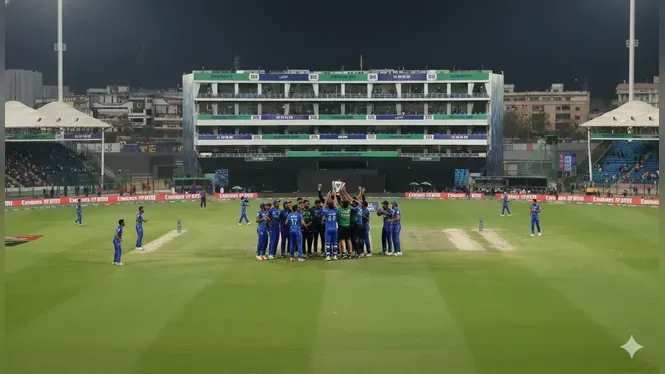
The stage was set at Karachi's National Stadium during the President's Trophy - Pakistan's premier domestic first-class competition. Pakistan Television, after posting modest totals in both innings, found themselves defending cricket's magic number: 40 runs.
The Record-Breaking Spell
What followed was a bowling masterclass:
- Ali Usman's devastating 6 wickets for 9 runs
- Amad Butt's crucial 4-wicket haul (4-28)
- 3 SNGPL batters dismissed for ducks
- Pakistan Test captain Shan Masood out for zero
SNGPL's star-studded lineup collapsed to 37 all out, handing PTV a dramatic two-run victory and rewriting cricket history.
Why This Record Matters
Cricket historians highlight three revolutionary changes that made this record-break possible:
1. Pitch Evolution
Modern curated pitches offer more assistance to bowlers compared to the unpredictable surfaces of 18th-century England. The Karachi surface provided turn and bounce that would have been unimaginable to 1791 cricketers.
2. Bowling Techniques
From underarm lobs to precision seam bowling, centuries of technical development created bowlers capable of exploiting microscopic weaknesses. Usman's left-arm spin demonstrated control levels unknown in cricket's early days.
3. Professional Structures
The President's Trophy represents cricket's shift from amateur pastime to professional sport. Domestic systems now produce athletes trained specifically for high-pressure situations like defending minimal totals.
Connecting Past and Present
This record-break creates a fascinating bridge between cricket's eras:
| 1791 Match | 2023 Match |
|---|---|
| Middlesex vs All-England | PTV vs SNGPL |
| Thomas Lord Ground, London | National Stadium, Karachi |
| Handmade cork balls | Machine-stitched Kookaburra balls |
| Wealthy amateurs | Professional athletes |
The Science of Low-Score Defenses
Defending tiny totals requires perfect alignment of factors:
- Psychological Pressure: Batters face unusual scoreboard tension
- Precision Bowling: No margin for error in line/length
- Fielding Perfection: Every dropped catch proves costly
- Pitch Deterioration: Fourth-day surfaces favor bowlers
PTV's achievement demonstrates how modern players have mastered these elements through specialized training unavailable to their 18th-century counterparts.
A New Chapter in Cricket History
As the Karachi match concluded, cricket historians immediately recognized its significance. The 1791 record had become part of cricketing folklore - a statistical curiosity many assumed would never be challenged. Pakistan's domestic players have now rewritten one of sport's most enduring milestones.
This match also highlights the President's Trophy's growing stature in developing competitive players. When a domestic game featuring current internationals like Shan Masood can produce such historic moments, it speaks volumes about Pakistan's cricket depth.
What Comes Next?
With the 232-year barrier broken, attention turns to whether 40 runs remains the new defense standard or if bowlers can push boundaries further. As techniques evolve and data analytics refine tactics, cricket's next great record chase has already begun.
For now, Pakistan Television's players have etched their names alongside those 18th-century pioneers - unlikely companions separated by centuries but forever linked by cricket's endless capacity for surprise.