World Cup 2027 Blueprint: How NZ Series Snubs Reveal India's Radical ODI Reset Strategy
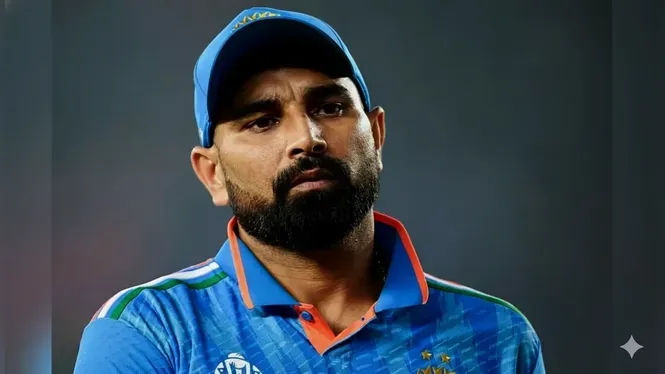
Indian cricket's selection shocks for the New Zealand ODI series aren't random exclusions but calculated gambits in a high-stakes transformation. By omitting proven performers like Mohammed Shami - whose omission Ravichandran Ashwin called "expected" - and Ruturaj Gaikwad, the Ajit Agarkar-led panel has sent an unambiguous message: India is building a very specific machine for the 2027 World Cup, and every cog must fit its revolutionary design.
The Hard Reset: Sacrificing Present Stars for Future Architecture
Ashwin's revelation that Shami's omission was "expected" underscores the ruthless pragmatism driving India's ODI overhaul while backing Mohammed Siraj's return signals India's laser focus on developing bowlers who can dominate through the next cycle. With 2027's South African conditions demanding extreme pace and athleticism, 33-year-old Shami - despite 229 ODI wickets - represents a timeline misalignment.
"They do not want him in the ODI team," fumed Shami's childhood coach, criticizing the selectors despite the pacer's strong domestic performances. But selector whispers suggest this isn't about current form - it's about constructing a pace battery that peaks simultaneously in 2027. The same logic applies to batting, where even a talent like Ruturaj Gaikwad becomes collateral damage.
The Gaikwad Paradox: When Balance Trumps Brilliance
Gaikwad's exclusion triggered unprecedented criticism, with former captain Kris Srikkanth telling India Today that the batter should "say he can keep wickets" while bluntly stating selectors made "the wrong call." Ashwin's analysis reveals deeper methodology: "With form and balance in his favour, Gaikwad deserved the ODI spot ahead of Rishabh Pant," he stated, adding India missed a straightforward selection call - clarifying this isn't personal but positional warfare.
Selectors are prioritizing multi-role players who offer tactical flexibility. In Gambhir-Agarkar's vision, every ODI spot must solve multiple equations: a finisher who bowls, a keeper who anchors, or a spinner who bats. Gaikwad's traditional opener profile clashes with their quest for Swiss Army knife versatility - a non-negotiable for 2027's likely 400-run par scores.
Contingency as Strategy: The Shadow Squad Revelation
The standby plan for Shreyas Iyer's potential absence unveils another layer. A "28-year-old century-maker" waits in the wings, confirming India's systematic depth-chart development. Unlike past reactive selections, this panel maintains parallel talent pipelines - one for immediate deployment, another being groomed for 2027's exacting demands.
Irfan Pathan's bewilderment - "'Only selectors know what they're thinking'" after expressing support for Shami actually validates the approach. This isn't random experimentation but targeted prototyping. Each series serves as a lab to test combinations against specific future scenarios: chasing 350 on Johannesburg highways or defending 240 on Port Elizabeth sticklers.
The Agarkar-Gambhir Doctrine: Efficiency Over Emotion
Criticism of the selection panel misses their fundamental mandate: win World Cups, not bilateral goodwill. Agarkar's data-driven approach combined with Gambhir's hard-nosed realism creates a selection ethos valuing:
- Age-Archetype Alignment: Players must fit 2027's projected physical/technical requirements
- Role Specialization: No more square pegs; each position has defined KPIs
- Peak Synchronization: Ensuring core groups mature simultaneously for the tournament
This explains Shami's "premature" exit and Gaikwad's shock exclusion. Their timelines or skill sets don't align with the 2027 masterplan. Even Rishabh Pant's inclusion over Gaikwad reflects wicketkeeping's premium value in the new calculus.
The Road to 2027: Five Selection Battlegrounds
India's ODI reset will manifest through five key transitions:
- Pace Revolution: Transitioning from Shami's craft to Umran Malik's raw pace
- Spin Reboot: Developing wrist-spin all-rounders for African conditions
- Middle-Order Dynamism: Creating power-hitters who bowl 5+ overs
- Fielding Thresholds: Making athleticism non-negotiable for selection
- Injury-Proofing: Building physiological resilience for 50-over marathons
The New Zealand series offers early clues. Will Siraj's death bowling show 2027 readiness? Can Shivam Dube's power-hitting justify his fielding limitations? Each match becomes an audition for roles in South Africa.
Legacy vs Vision: The Selectors' High-Wire Act
Agarkar's panel walks a tightrope between respecting current contributions and future-proofing the team. As Shami's childhood coach vents frustration and legends like Srikkanth question Gaikwad's exclusion, selectors must withstand emotional pressure. Their compass remains fixed on a singular truth: no nation has won an away ODI World Cup without blooding 70% of its squad at least three years prior.
India's 2023 final loss exposed structural gaps - lack of pace-bowling depth, inflexible batting order, and fielding vulnerabilities. The New Zealand snubs directly address these flaws, however painfully. By prioritizing specific skill archetypes over individual reputations, India isn't just selecting a team - it's engineering a World Cup-winning organism.
The coming months will reveal whether this radical reset delivers on its promise. But one thing is clear: in the Agarkar-Gambhir era, every selection is a chess move toward checkmating the world in 2027.